Future Worksite Building Onboarding: A Strategic Framework for Modern Digital Integration
The landscape of professional integration has shifted dramatically. Gone are the days when onboarding was merely a checklist of administrative tasks completed in a conference room. Today, Future Worksite Building Onboarding represents a sophisticated approach to merging physical infrastructure with digital user experiences. It is not just about welcoming a new employee or client; it is about architecting an environment—whether virtual or physical—that immediately aligns with organizational goals and operational efficiency. For entrepreneurs, marketers, and decision-makers, understanding this concept is critical for maintaining competitiveness in a rapidly evolving ecosystem.
At its core, Future Worksite Building Onboarding is the deliberate design of the initial interaction point between a user and a workspace ecosystem. This could be a hybrid office environment, a remote collaboration hub, or a client-facing digital portal. The strategic utility lies in its ability to set the tone for productivity, culture, and long-term engagement. When executed correctly, it reduces friction, accelerates time-to-value, and establishes a clear narrative about how work gets done. Conversely, neglecting this phase can lead to confusion, disengagement, and a fragmented operational workflow that costs time and resources to repair later.
Aligning Onboarding with Strategic Goals and Operational Outcomes
Thoughtful implementation of Future Worksite Building Onboarding supports a wide array of business objectives. For small business owners and freelancers, the primary goal is often scalability. A well-structured onboarding process allows you to replicate success without reinventing the wheel for every new team member or project. By utilizing modular elements and standardized workflows, you create a system where creativity and productivity can flourish because the foundational logistics are already solved.
From a branding perspective, the onboarding experience is your first tangible deliverable. It communicates your values more effectively than any mission statement. If your onboarding is clunky, outdated, or confusing, it signals operational inefficiency. However, if the experience is seamless, intuitive, and visually coherent, it reinforces a brand identity centered on competence and innovation. This is particularly relevant for educators and publishers who rely on user retention and engagement. A smooth entry point encourages deeper exploration of your content or services.
Furthermore, this approach enhances customer experience and long-term results. In a B2B context, onboarding a client onto a new worksite platform or physical location requires clarity and reassurance. By mapping out the journey carefully, you reduce anxiety and build trust. This strategic foresight ensures that the relationship starts on solid ground, increasing the likelihood of sustained partnership and positive outcomes.
The Role of Visual Communication and Vector Templates
One of the most effective ways to execute Future Worksite Building Onboarding is through high-quality visual communication. Complex processes are best understood when broken down into digestible visual steps. This is where resources like a Future worksite building onboarding vector template become invaluable assets for planners and creators. These templates provide a structured framework for illustrating workflows, ensuring that the message is consistent regardless of who is delivering it.
Vector templates offer distinct advantages over static images. Because they are scalable, they maintain clarity across all devices, from large desktop monitors to mobile screens. This responsiveness is crucial in a world where professionals access information on the go. A responsive mobile website with icons derived from these templates ensures that users can navigate the onboarding process effortlessly, whether they are standing in a lobby with a smartphone or sitting at a desk with a laptop.
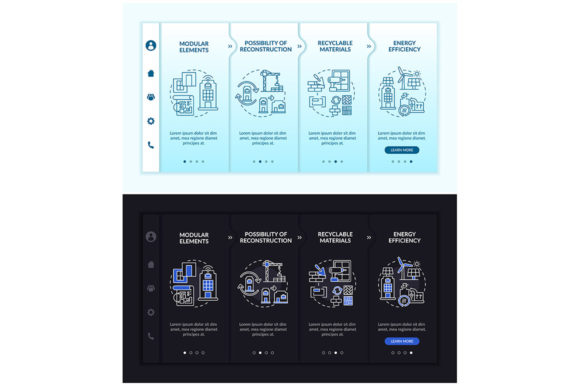
The inclusion of linear illustrations adds a layer of modern sophistication. Linear art is clean, uncluttered, and focuses the viewer's attention on the essential elements of the process. When combined with a night and day mode concept, these illustrations demonstrate versatility and adaptability—key traits for future-ready worksites. The ability to switch between modes reflects the reality of modern work, which often spans different time zones and lighting conditions. It shows that the system is designed for human comfort and usability, not just rigid functionality.
Implementing a Four-Step Web Page Walkthrough
To translate strategy into action, consider structuring your digital onboarding as a web page walkthrough consisting of four distinct screens. This method prevents cognitive overload and guides the user through a logical progression. Here is how you might approach this structure:
- Orientation and Context: The first screen should establish the "why." Use a compelling headline and a brief introduction to explain the purpose of the worksite or platform. Incorporate a hero illustration that sets the visual tone. This is where you align the user's expectations with your strategic vision.
- Navigation and Tools: The second screen focuses on the "how." Highlight the key tools and interfaces the user will interact with. Use icons to represent different modules or departments. This step demystifies the environment and empowers the user to take control.
- Workflow and Collaboration: The third screen illustrates the flow of work. Show how tasks move from initiation to completion and how collaboration happens within the space. Linear illustrations work well here to depict movement and connection without clutter.
- Support and Growth: The final screen addresses long-term success. Provide links to resources, support channels, and learning materials. Emphasize that the onboarding is just the beginning of a continuous journey of improvement and development.
This four-step approach ensures that no critical information is missed while keeping the experience engaging. It transforms a potentially dry administrative process into an interactive narrative that the user actively participates in.
Technical Assets and Modular Flexibility
For those tasked with building these systems, having the right technical assets is non-negotiable. A comprehensive ZIP file containing EPS, JPG, PNG, SVG, and AI formats provides the flexibility needed to adapt to various platforms and requirements. SVG and AI files are essential for developers and designers who need to edit vectors or animate elements for web interactions. PNG and JPG formats ensure compatibility with standard document viewers and presentation software, while EPS remains a staple for high-quality print materials.
The concept of modular elements cannot be overstated. In a dynamic business environment, needs change rapidly. A modular design allows you to swap out sections, update branding, or add new features without rebuilding the entire onboarding structure from scratch. This agility is a significant competitive advantage. It allows marketers to test different messaging strategies and operations teams to refine processes based on real-world feedback.
Moreover, the integration of night and day mode concepts into these assets demonstrates a commitment to user-centric design. It acknowledges that work does not happen in a vacuum and that environmental factors influence performance. By providing assets that support both modes, you ensure that your communications remain effective and visually appealing regardless of the context in which they are viewed.
Risks of Implementation Without Clear Context
While the benefits of Future Worksite Building Onboarding are substantial, there are risks associated with implementing it without clear goals or context. The most common pitfall is prioritizing aesthetics over functionality. A beautiful interface or a stunning vector illustration means little if it does not help the user achieve their objective. Decision-makers must ensure that every element serves a purpose and contributes to the overall strategic outcome.
Another risk is over-complication. In an effort to be thorough, organizations sometimes create onboarding processes that are too dense or complex. This can overwhelm new users and lead to disengagement. It is vital to strike a balance between comprehensiveness and simplicity. Regularly review and refine your onboarding materials based on user feedback to ensure they remain relevant and effective.
Additionally, relying on generic templates without customization can dilute your brand identity. While vector templates provide a great starting point, they must be adapted to reflect your unique culture and values. A one-size-fits-all approach rarely works in today's diverse and specialized market. Tailor the content and visuals to speak directly to your specific audience, whether they are internal employees, external clients, or partners.
Making Intentional Decisions for Long-Term Value
Ultimately, the success of Future Worksite Building Onboarding depends on intentional decision-making. It requires a shift from viewing onboarding as a transactional event to seeing it as a strategic investment. Leaders must ask themselves: What behavior do we want to encourage? What barriers exist for our users? How can we make this experience more human and less mechanical?
By focusing on these questions, you can create an onboarding experience that not only informs but also inspires. It becomes a tool for cultural transmission, operational excellence, and brand reinforcement. Whether you are a hobbyist launching a new project or a corporation scaling global operations, the principles remain the same: clarity, consistency, and care.
In conclusion, embracing the methodologies behind Future Worksite Building Onboarding offers a pathway to more resilient and adaptable organizations. It leverages the power of visual storytelling, modular design, and strategic planning to create environments where people and processes thrive. As you move forward, remember that the quality of your beginning often dictates the trajectory of your future. Invest wisely in your onboarding, and the returns will manifest in improved productivity, stronger relationships, and sustained growth.